Choose the indicator from the crane’s certified maximum suspended load and every permitted operating configuration, not from the payload operators lift most often. By checking the nameplate, below-the-hook equipment, reeving, dynamic forces and measurement range, you can decide whether 5, 10, 20 or 50 tons is defensible and specify the protection system around it.
Key takeaways
- Use the crane’s governing rated capacity, not its usual payload.
- Include every hook, trolley, attachment and operating mode in the load path.
- Match measurement resolution to shock loads, heat, dust and vibration.
- Test alarms, cut-outs and sensors together before accepting the system.
Start with the crane’s governing rated capacity, not its usual payload
A safe load indicator must cover the crane’s governing rated capacity, not the heaviest load you usually lift. Start with the crane nameplate, design documents and every permitted operating mode.
If the crane is rated for 10 tons, specify a 10 ton safe load indicator steel plant application rather than a 20-ton unit for “extra margin”; excessive range can reduce useful resolution.
Calculate the required coverage in this order:
- Record the maximum rated load for each hoist, radius, trolley position and operating mode.
- Identify the highest permitted rating. A crane rated at 5 tons in one zone and 10 tons in another requires protection for both ratings, not a single misleading 5-ton limit.
- Add the complete suspended load: hook block, ropes below the measuring point, slings, shackles, lifting beam, magnet, grab, ladle, spreader and other attachments.
- Subtract that equipment weight from the rated capacity to find the maximum product payload. A 20-ton crane may therefore lift less than 20 tons of steel or material.
- Confirm the sensor’s overload rating, accuracy and calibration tolerance before setting alarms or cut-outs.
A phrase such as 5 ton safe load indicator steel plant identifies a search requirement, not proof that 5 tons is correct. Choose that range only when every permitted crane mode is rated at 5 tons or below.
Do not set a 20-ton indicator above 20 tons because the crane once survived a heavier lift; the indicator protects the certified limit, not permission to exceed it.
Include the complete load path and the crane’s operating configuration
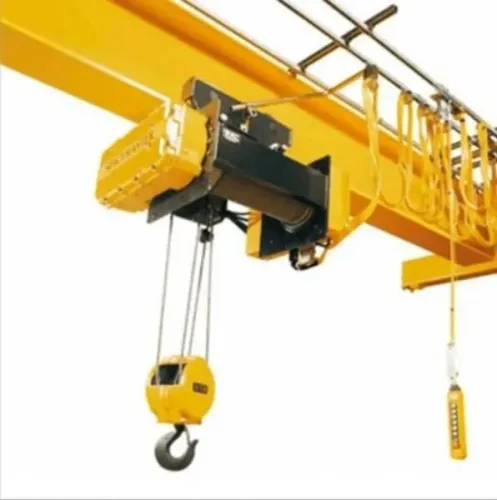
The displayed hook load is not automatically the crane’s usable payload. Add the hook block, ropes below the measuring point, lifting beam, magnet, grab, ladle, spreader, slings, shackles and every other attachment. A nominal 20-ton crane can therefore have less than 20 tons available for product.
Before specifying the indicator, check:
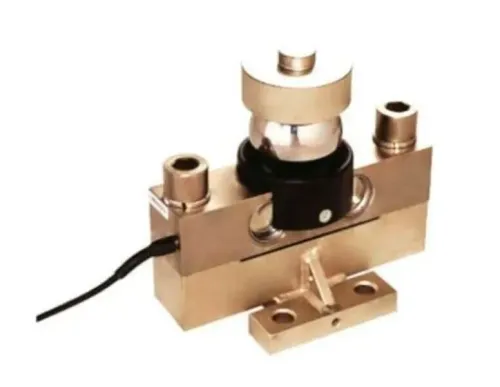
- The measuring point: a load pin at the hook measures suspended load directly; a rope-tension sensor measures only rope force and needs the correct reeving factor.
- The reeving: record the number of rope falls, dead-end arrangement and block weight. A multi-fall system changes sensor force, calibration values and the load shown on the display.
- The hook equipment: include the heaviest permitted magnet, grab, ladle or spreader, not only the lightest routine attachment.
- The capacity zones: document rated loads at each radius, trolley position, boom position or operating mode. Dual hoists and shared loads need separate limits and compatible measurement channels.
- The instrument range: a 5 ton safe load indicator suits a crane whose rated capacity and every mode are 5 tons or less; a higher-capacity mode requires coverage of that mode.
- The governing limit: a 10 ton safe load indicator matches a 10-ton rated configuration; do not choose 20 tons merely for extra range.
For a 20 ton safe load indicator in a steel plant, set protection against the certified rated load after accounting for accuracy and the measuring arrangement. Do not treat survival of a heavier lift as permission to overload. Configuration changes require recalculation, not a reset of the display.
Balance measurement resolution against dynamic and environmental loads
A 5-ton range is too small when the crane, any permitted radius, or the complete suspended load exceeds 5 tons. That includes the hook block, ropes below the measuring point, slings, magnets, grabs, ladles, spreaders and lifting beams—not just the steel product.
| Range | Too small or too large | Suitable use |
|---|---|---|
| 5 tons | Too small for any higher-capacity mode, dual-hoist arrangement or variable-capacity zone; a 5 ton safe load indicator steel plant installation is suitable only when every permitted configuration is rated at 5 tons or less. | Small cranes with one governing capacity and modest dynamic loads. |
| 10 tons | A 10-ton safe load indicator should match a crane governed at 10 tons; choosing 20 tons for “extra margin” reduces useful resolution and makes light-load readings less informative. | Cranes whose certified limit, complete load path and operating modes do not exceed 10 tons. |
| 20 tons | Too small above 20 tons; too large for a 10-ton governing limit. Never set its overload limit above 20 tons because the crane has survived heavier lifts. | A 20 ton safe load indicator in a steel plant when the certified governing load is 20 tons after measuring-arrangement and accuracy allowances. |
| 50 tons | Unsuitable for a lower-capacity crane when its coarse resolution hides overload growth; too small above 50 tons. | High-capacity cranes whose certified limit and complete suspended load require it. |
Dynamic lifting, vibration, hot scale, water, dust and electromagnetic interference can corrupt readings or damage sensors. Check transient-load and sensor-overload ratings, accuracy, temperature rating, shielding, cable routing, heat protection and enclosure suitability before selecting the range. A wider range is not a substitute for those protections.
Specify the alarm, cut-out and sensor installation as one safety system
Treat the indicator, alarm, cut-out and sensors as one engineered safety system, not as a display added to the crane. For a steel plant crane safety system in Pune, require compatibility with the hoist control circuit, limit switches, emergency controls, event logging and operator alarms before approving the capacity.
- State the measuring range, display resolution, accuracy, sensor overload rating and the crane’s certified rated load. Do not accept “20-ton SLI” as the complete specification.
- Identify the sensor location for the actual reeving: load pin, rope dead-end, sheave assembly or another approved point. Document how hook blocks, magnets, grabs, ladles and spreader beams enter the displayed load.
- Set the warning alarm below the rated limit when operators need response time, and document its exact value. Set the hoist cut-out separately, then verify that it inhibits dangerous lifting without creating an uncontrolled stop.
- Specify sensor temperature rating, heat shields, cable routing, shielding, enclosure protection and vibration resistance for radiant heat, scale, water, dust, welding and variable-frequency drives.
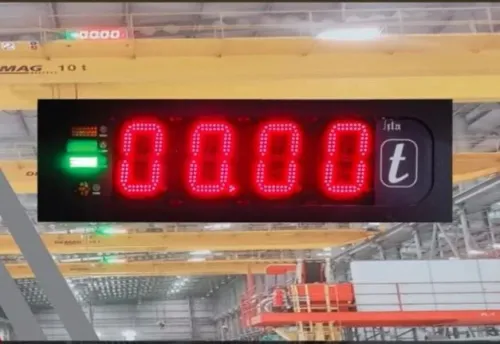
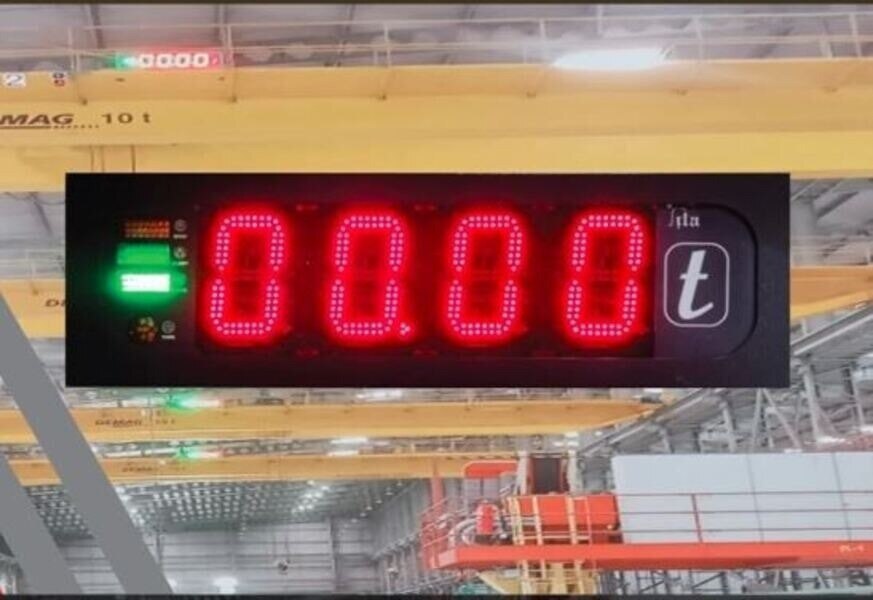
- Require a visible display at the operator’s station, an audible and visual alarm, a defined fail-safe response to sensor or cable faults, and logged overload events.
- Require calibration with traceable test loads or an approved equivalent across the working range, not only a zero check.
SMARTITA PRIVATE LIMITED can be assessed against this checklist by requesting its sensor arrangement, alarm logic, cut-out interface and commissioning records for the specific crane. A 20-ton system must not be set above 20 tons because the crane has occasionally survived heavier lifts.
Related products
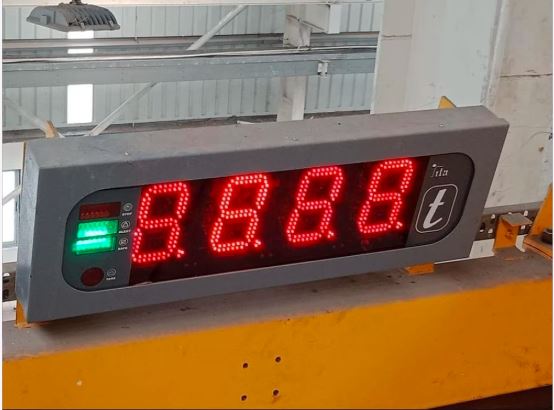 | Safe Load Indicator ₹35000 The 5 Ton Safe Load Indicator (SLI) from SmartITA Pvt. Ltd. For Automation is a reliable crane safety system designed to monitor lifting loads in... View product → |
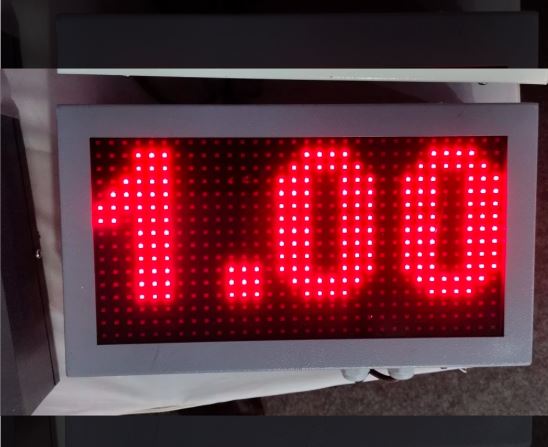 | Safe Load Indicator ₹87000 The 50 Ton Safe Load Indicator (SLI) from SmartITA Pvt. Ltd. For Automation is a high-performance crane safety system designed to accurately monitor... View product → |
Verify the selected capacity through calibration and acceptance testing
Prove the selection with a witnessed acceptance test using traceable test loads or an approved equivalent method. Test the indication, warning and protective cut-out across the crane’s working range, not only at one convenient weight.
- Record the unloaded zero, then apply known loads at low, mid-range and near rated capacity.
- Compare each displayed value with the test load and the supplier’s stated accuracy and calibration tolerance.
- Confirm the alarm activates at the specified warning point and the hoist inhibit or cut-out operates at the approved overload point.
- Repeat the test in every permitted hoist, reeving, radius or position mode, including the lowest-capacity mode.
- Check that the event logger records the overload, and that the alarm remains visible and audible to the operator.
- Verify recovery after removing the load, including reset controls and prevention of an automatic restart.
For a 20 ton safe load indicator steel plant installation, set the overload limit to the crane’s certified rated load after accounting for measuring arrangement and stated accuracy. Do not raise it because the crane survived a heavier lift; the indicator is not permission to overload.
A zero check alone proves little after rope replacement, load-cell replacement, structural work or changed reeving. The acceptance record should identify test weights, sensor location, set points, results, calibration date and witness signatures. A steel plant crane safety system in Pune must also prove that the display, alarm, cut-out and existing crane controls work together.
Frequently asked questions
How do you choose safe load indicator capacity for a steel plant crane?
Start with the crane nameplate and design documents. Select capacity for the governing rated load across every permitted operating mode, not the usual payload.
What must the load path include when selecting indicator capacity?
Account for the hook, ropes, sheaves, load block, lifting beam, grabs, magnets, spreaders and any attachment that transfers force to the crane.
How should you balance measurement resolution with steel plant conditions?
Choose resolution that shows useful load changes without sacrificing headroom for dynamic loading, impact, vibration, heat, dust or side loading.
What should a crane safety system specify besides the sensor?
Define the sensor installation, display, warning alarm, overload cut-out, reset behaviour and control interface as one tested safety system.
How do you verify the selected indicator capacity?
Check installation records, calibrate against traceable test loads, test alarms and cut-outs at their set points, and document acceptance results for each operating mode.
Related products
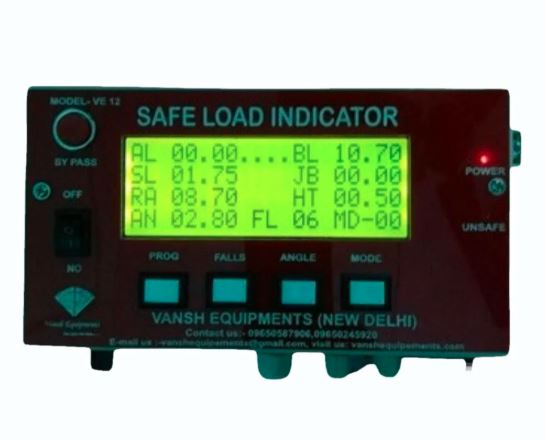 | Safe Load Indicator ₹62000 The 20 Ton Safe Load Indicator (SLI) from SmartITA Pvt. Ltd. For Automation is a precision-engineered crane safety device designed to monitor lifting... View product → |
 | Safe Load Indicators for Cranes Safe Load Indicators for Cranes SmartITA Pvt. Ltd. designs and manufactures advanced Safe Load Indicators (SLI) for Cranes to improve operational safety and prevent crane... View product → |
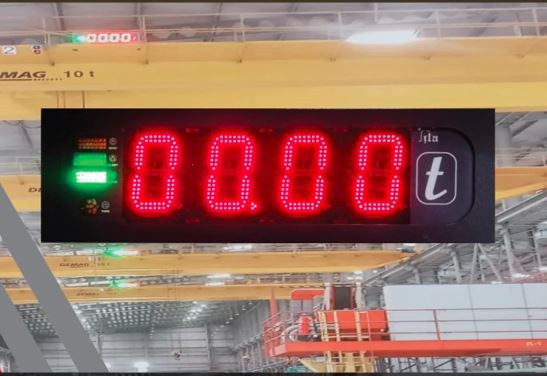 | Safe Load Indicator ₹48000 Price: ₹48,000/Piece The 10 Ton Safe Load Indicator (SLI) from SmartITA Pvt. Ltd. View product → |
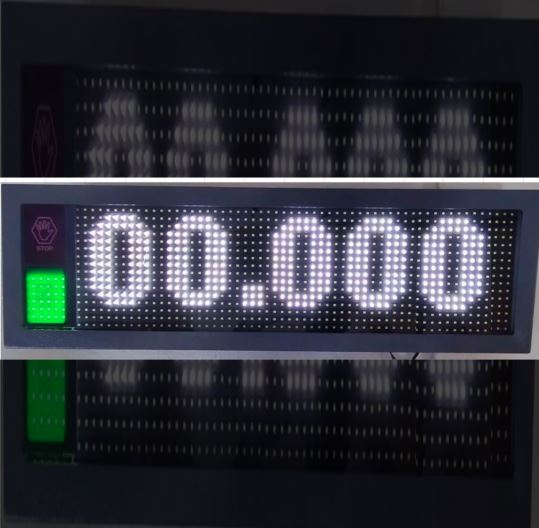 | Crane Safe Load Indicator ₹25000 Price: ₹25,000/Piece The Crane Safe Load Indicator (SLI) from SmartITA Pvt. Ltd. View product → |